
- 0
- 2.006 words
You don’t need a gym membership, expensive equipment, or an hour of free time to stay active — and science backs that up completely.
When Robert, 58, retired from his desk job, he assumed he’d finally have time to “get fit.” He bought a gym membership, went twice, and never went back. Sound familiar? The truth is, for millions of Americans in their 40s, 50s, and 60s, the gym model simply doesn’t stick — and it doesn’t have to.
According to the CDC, fewer than 25% of American adults meet the recommended physical activity guidelines. Yet research consistently shows that regular daily movement — even in short, informal bursts — delivers many of the same health benefits as structured exercise. The key isn’t intensity. It’s consistency.
In this guide, you’ll discover why daily movement matters so much as you age, which activities actually work for adults over 35, and how to build a sustainable routine that fits your real life — no locker room required.
What Is “Daily Movement” and Why Does It Matter as You Age?
Daily movement refers to any intentional physical activity woven into your everyday routine — think walking to the mailbox, gardening, taking the stairs, or doing a 10-minute stretch after lunch. It’s distinct from scheduled “exercise sessions,” though those matter too.
This concept is sometimes called NEAT — Non-Exercise Activity Thermogenesis — and it refers to all the calories your body burns during activities that aren’t formal workouts. Research from the Mayo Clinic suggests that NEAT can account for a significant portion of your total daily energy expenditure and plays a surprisingly important role in metabolic health.
As you age, daily movement becomes even more critical. After age 30, adults begin losing muscle mass at a rate of about 3–8% per decade — a process called sarcopenia — according to research published through the NIH. Without consistent movement, this loss accelerates, leading to reduced strength, balance problems, and a higher risk of falls.
The good news? You don’t need to reverse decades of inactivity overnight. Even modest increases in daily movement have been linked to meaningful improvements in cardiovascular health, joint function, mood, and longevity.
The Real Health Benefits of Staying Active Without a Gym
Before diving into the how, let’s talk about the why — because understanding what’s at stake can be a powerful motivator.
Cardiovascular health: The American Heart Association recommends at least 150 minutes of moderate-intensity activity per week. Studies indicate that breaking this into shorter sessions — even 10 minutes at a time — produces comparable cardiovascular benefits to longer continuous workouts.
Joint health and mobility: Contrary to what many people assume, regular low-impact movement lubricates your joints and may reduce stiffness associated with osteoarthritis. Harvard Health Publishing notes that walking, swimming, and gentle stretching can help maintain cartilage health over time.
Mental health: Physical activity stimulates the release of endorphins and supports healthy levels of serotonin and dopamine. Research suggests that even 20 to 30 minutes of moderate movement per day is associated with lower rates of depression and anxiety in adults over 40.
Weight and metabolic function: Regular movement helps regulate blood sugar, improve insulin sensitivity, and support healthy body weight — all critical factors for reducing the risk of type 2 diabetes and metabolic syndrome. If you’re curious about how lifestyle changes can affect blood sugar control, our article on Metabolic Syndrome: Signs, Risks, and How to Reverse It goes deeper into this connection.
Bone density: Weight-bearing activities — even light ones like walking or carrying groceries — help maintain bone density and reduce the risk of fractures, according to the National Osteoporosis Foundation.
Best Types of Daily Movement for Adults Over 35
Not all movement is created equal, and what works best for you depends on your current fitness level, any existing health conditions, and your personal preferences. Here are the most evidence-supported options for adults in midlife and beyond.
Walking: It’s simple, free, and remarkably effective. A large-scale study published in JAMA Internal Medicine found that walking approximately 7,500 steps per day was associated with significantly lower mortality risk in older adults. You don’t need to hit 10,000 steps — that number was a marketing figure, not a clinical target. Start where you are and build gradually.
Bodyweight exercises at home: Squats, wall push-ups, chair-assisted lunges, and standing calf raises require no equipment and can be done in under 15 minutes. These movements preserve muscle mass, support balance, and strengthen the stabilizing muscles that protect your knees and hips. For a more structured approach to building strength at home, see our guide on Strength Training After 40: Benefits, Tips & How to Start.
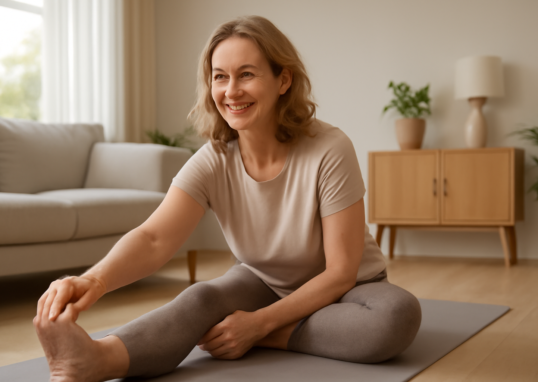
Stretching and flexibility work: As connective tissue stiffens with age, daily stretching becomes one of the most underrated investments you can make. Even 5 to 10 minutes of gentle stretching in the morning or evening can meaningfully improve range of motion and reduce the risk of injury. Our article on Flexibility and Stretching: Your Guide to Moving Better After 35 covers this in detail.
Swimming and water aerobics: These are particularly valuable for adults with joint pain, arthritis, or lower back issues. Water provides resistance without impact, making it one of the most joint-friendly forms of exercise available. Many local YMCAs and community centers offer affordable access.
Cycling (indoor or outdoor): Stationary bikes are a low-impact way to get your heart rate up without stressing your knees. Even moderate cycling sessions of 20–30 minutes, three to four times per week, have been linked to improved cardiovascular fitness and lower blood pressure.
Gardening, housework, and active errands: Don’t underestimate these. Pushing a lawn mower, raking leaves, mopping floors, or carrying bags from the grocery store all count as meaningful physical activity. According to the CDC, any activity that raises your heart rate above resting counts toward your weekly movement goals.
How to Build a Sustainable Daily Movement Routine
The most effective exercise routine is the one you actually do consistently. Here’s a practical, step-by-step approach to making daily movement a lasting habit.
Start with what you already do. Before adding anything new, notice your existing movement patterns. Do you walk your dog? Take the stairs at work? These are your foundation. Build from there — don’t try to overhaul everything at once.
Set a realistic daily minimum. Research on habit formation suggests that starting with a very small commitment — as little as 10 minutes per day — dramatically increases the likelihood of long-term adherence. Aim to move for at least 10 minutes continuously, three times per day. That’s 30 minutes total, broken up — and it counts.
Use “movement anchors.” Attach physical activity to existing habits. A short walk after breakfast, a few squats while waiting for coffee to brew, or a 5-minute stretch before bed requires no extra planning — it just piggybacks on what you’re already doing.
Track your progress simply. You don’t need a $300 smartwatch. A basic pedometer, a free smartphone app, or even a simple tally in a notebook can keep you motivated. Research published in JAMA Internal Medicine found that step-tracking significantly increased physical activity levels in adults across all age groups.
Include both cardio and strength. Balance is key. Aim for a mix of aerobic activity (walking, swimming, cycling) and muscle-strengthening activity (bodyweight exercises, resistance bands) across the week. The CDC recommends strength-building activities on at least two days per week for adults.
Rest and recover intentionally. Rest days are not failures — they’re part of the plan. Adequate recovery allows muscles to repair and reduces injury risk, especially as you get older. Active rest (a gentle walk or light stretching) is often better than complete inactivity.
When to See a Doctor Before Getting More Active
For most healthy adults, gradually increasing daily movement is safe and encouraged. However, there are situations where checking in with your doctor first is genuinely important — not just a legal disclaimer.
Talk to your doctor before significantly increasing activity if you:
- Have been diagnosed with heart disease, heart failure, or have had a recent cardiac event
- Experience chest pain, shortness of breath, or dizziness during light activity
- Have uncontrolled high blood pressure or diabetes
- Have had a recent joint replacement or orthopedic surgery
- Have been largely sedentary for a year or more and plan to significantly increase intensity
- Have a history of osteoporosis or frequent falls
During your visit, ask about the Physical Activity Readiness Questionnaire (PAR-Q) — a simple screening tool many physicians use to identify any red flags before a patient starts a new exercise program. You might also ask about a referral to a physical therapist or certified exercise physiologist, who can create a movement plan tailored specifically to your health status.
One important nuance worth acknowledging: individual responses to physical activity vary considerably. What feels manageable for one 55-year-old may be too intense for another, even with similar health profiles. Honor your body’s signals, and don’t compare your progress to anyone else’s.
Frequently Asked Questions About Daily Movement and Healthy Aging
How much daily movement do adults over 50 really need?
The CDC recommends at least 150 minutes of moderate-intensity aerobic activity per week — that’s about 30 minutes on five days — plus muscle-strengthening activities on two or more days. You can break the 30 minutes into three 10-minute sessions and still get the benefits. The key is accumulating enough total movement across the week.
Is walking enough exercise, or do I need to do more?
Walking is an excellent foundation and, for many adults, provides substantial health benefits on its own. Research suggests that brisk walking — at a pace where you can speak but not sing — delivers meaningful cardiovascular and metabolic benefits. That said, adding some resistance-based movement a couple of times a week helps protect muscle mass and bone density as you age.
Can I lose weight through daily movement without going to the gym?
Yes, though nutrition plays a larger role in weight management than exercise alone. Increasing your daily step count, incorporating bodyweight exercises, and reducing long periods of sitting can all contribute to a healthier body weight over time. The combination of consistent movement and mindful eating tends to produce the most sustainable results.
What if I have joint pain — should I still try to move every day?
In most cases, yes — but the type of movement matters. Low-impact activities like swimming, cycling, and gentle stretching are often well-tolerated even with arthritis or chronic joint pain. Movement actually helps keep joints lubricated and can reduce stiffness over time. Always check with your physician or physical therapist if you’re unsure what’s appropriate for your specific condition.
How long does it take to notice the benefits of daily movement?
Many people report improved energy levels and mood within the first one to two weeks of consistent daily movement. More measurable changes — like improved blood pressure, lower resting heart rate, and better sleep quality — typically emerge over six to twelve weeks of regular activity, according to research from the American College of Sports Medicine.
Conclusion
Staying active as you age doesn’t require a gym, a trainer, or a complicated program. It requires consistency, a little creativity, and the willingness to see everyday moments — a walk after dinner, a stretch before bed, a set of squats during a commercial break — as meaningful investments in your health.
The evidence is clear: daily movement, even in modest amounts, supports your heart, your bones, your brain, and your mood. It slows the physical changes that come with aging and helps you maintain the independence and energy you want in your 40s, 50s, 60s, and beyond.
Start small. Be consistent. And remember that every step — literally — counts. If you’re ready to take the next step toward a more active life, talking with your healthcare provider is the best place to begin.
Medical Disclaimer: This article is for informational and educational purposes only and does not constitute medical advice, diagnosis, or treatment. Always consult a qualified healthcare professional before making any health-related decisions or changing your treatment plan.
Reviewed by the Healthy Care Today Editorial Team — a group of health writers committed to evidence-based wellness content for everyday Americans.
Autor

negociosnanet001@gmail.com
Posts relacionados

Healthy Morning Routines That Transform Your Day After 40
- 0
- 2.291 words
Small morning habits can have a powerful ripple effect on your energy, mood, and long-term health — here’s what the science says...

Social Health After 40: Habits That Boost Well-Being
- 0
- 2.103 words
Your social life isn’t just good for your mood — it may be one of the most powerful things you can do...

Healthy Weight Management: Daily Habits That Actually Work
- 0
- 2.046 words
Small, consistent daily habits — not extreme diets — are what research consistently shows leads to lasting, healthy weight management. When David,...

Healthy Skin After 40: Daily Habits for a Glowing Complexion
- 0
- 2.186 words
Your skin changes as you age — but with the right daily habits, you can keep it healthy, resilient, and genuinely glowing...

Natural Ways to Keep Blood Sugar Balanced Daily
- 0
- 2.359 words
Simple, evidence-based lifestyle habits that help you maintain healthy blood sugar levels — and why starting now matters more than you think....
Flexibility and Stretching: Your Guide to Moving Better After 35
- 0
- 1.977 word
Simple, consistent stretching routines can reduce pain, improve posture, and help you stay active well into your 60s and beyond — here’s...