- 0
- 2.314 words
When stress follows you to bed, real sleep becomes nearly impossible — but understanding why can help you finally break the cycle.
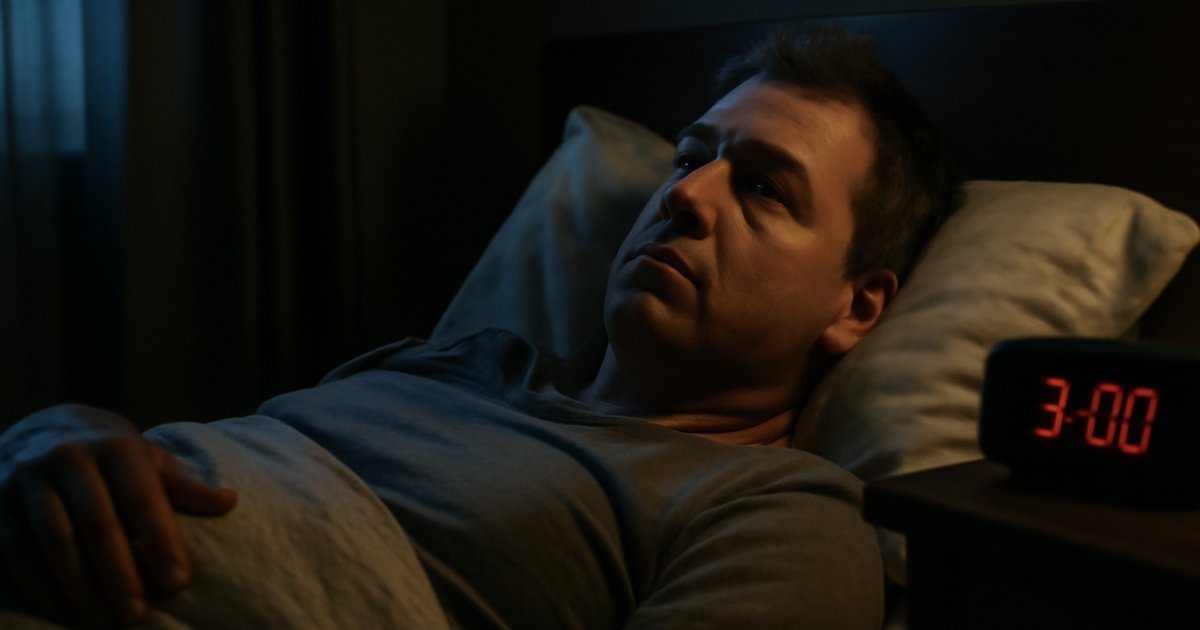
David, 48, had been lying awake for months. His mind wouldn’t stop racing the moment his head hit the pillow — replaying work deadlines, financial worries, and family tensions until 2 a.m. By morning, he felt worse than before he went to bed. Sound familiar?
You’re not alone. According to the American Psychological Association, more than 40% of American adults report that stress causes them to lie awake at night at least once a month — and for many, it happens far more often. Chronic stress and poor sleep form a relentless two-way cycle: stress makes it harder to sleep, and poor sleep makes stress harder to manage.
If you’re between 35 and 65, this cycle may be especially familiar. Midlife often brings peak responsibilities — career pressures, aging parents, growing children, health concerns — all of which feed directly into nighttime wakefulness and exhaustion.
In this article, you’ll learn exactly how chronic stress disrupts your sleep biology, what symptoms to watch for, and — most importantly — what evidence-based strategies can help you reclaim genuine, restorative rest.
What Is the Stress-Sleep Connection?
Sleep and stress are biologically intertwined in ways most people don’t fully appreciate. When you experience stress — whether from a work crisis or a persistent low-level worry — your body activates what’s known as the hypothalamic-pituitary-adrenal (HPA) axis, a hormonal system that triggers your fight-or-flight response.
In plain terms, your brain signals your adrenal glands to release cortisol, the primary stress hormone. Cortisol is designed to keep you alert and ready for action. It’s useful when you’re facing a real threat — but deeply disruptive when it floods your system at 11 p.m. when you’re trying to wind down.
According to the National Institutes of Health, elevated cortisol levels at night suppress melatonin production — the hormone your brain releases to signal that it’s time to sleep. This means chronic stress doesn’t just make your mind restless; it physically interferes with the chemical signals your body needs to initiate and maintain sleep.
Research published through the NIH also shows that people experiencing chronic stress spend significantly less time in deep, slow-wave sleep — the most physically restorative stage — and in REM sleep, which is critical for emotional processing and memory consolidation.
The result is what many describe as feeling exhausted but wired: your body is depleted, but your nervous system simply won’t let you rest.
Signs That Stress Is Disrupting Your Sleep
The symptoms of stress-related sleep disruption go beyond just "having trouble falling asleep." Many people experience a specific cluster of signs that point directly to chronic stress as the underlying cause.
Watch for the following:
- Racing or repetitive thoughts at bedtime — your mind replaying conversations, to-do lists, or worst-case scenarios
- Difficulty falling asleep despite feeling tired — lying awake for 30 minutes or more even when exhausted
- Waking between 2–4 a.m. — a common cortisol-related pattern, as cortisol naturally begins rising in the early morning hours
- Light, unrefreshing sleep — waking up feeling like you "never really slept"
- Increased dreaming or nightmares — stress raises REM activity and can intensify dream vividness
- Physical tension at bedtime — jaw clenching, tight shoulders, a racing heart while lying still
- Daytime fatigue combined with irritability, poor concentration, or anxiety
According to the American Psychological Association’s Stress in America report, adults who sleep fewer than eight hours a night report significantly higher stress levels than those who get sufficient sleep — confirming that the cycle runs in both directions.
It’s also worth noting that prolonged stress-related sleep disruption can increase the risk of developing a formal insomnia disorder. Johns Hopkins Medicine notes that when poor sleep patterns persist for three or more months, they often become self-sustaining — meaning even when the original stressor resolves, the sleep problem can continue independently.
Causes and Risk Factors
Not everyone who experiences stress develops significant sleep problems. Several factors influence how vulnerable you are to stress-related sleep disruption.
Non-modifiable risk factors include:
- Age: Adults over 40 experience natural changes in sleep architecture — lighter sleep cycles and earlier cortisol rises — that make stress-related disruption more likely, according to the National Institute on Aging.
- Sex: Women are statistically more likely than men to report stress-related sleep problems, partly due to hormonal fluctuations during perimenopause and menopause that intersect with HPA axis activity.
- Genetics: Research suggests some individuals have a more reactive HPA axis, meaning their cortisol response to stress is stronger and longer-lasting.
Modifiable risk factors include:
- Chronic work stress or burnout — ongoing job demands are among the most commonly reported triggers of sleep disruption in adults aged 35–55. If this resonates with you, our article on Sleep and Burnout: How Exhaustion Destroys Your Rest explores this connection in depth.
- Financial stress — economic worry is consistently one of the top reported stressors in APA surveys
- Caregiving responsibilities — particularly adults caring for aging parents or children with health needs
- Poor sleep hygiene — inconsistent schedules, screen use at night, and caffeine late in the day all amplify cortisol’s disruptive effect
- Sedentary behavior — physical inactivity has been linked to heightened HPA reactivity and poorer sleep quality
- Alcohol use — while alcohol may seem to help you fall asleep, it significantly fragments sleep in the second half of the night and disrupts REM cycles
A 2023 analysis published through the NIH found that adults with three or more simultaneous stressors — such as work pressure, relationship strain, and financial worry — were more than twice as likely to meet clinical criteria for insomnia compared to those with a single stressor. Understanding your specific stress load matters when designing a solution.
Evidence-Based Strategies to Break the Cycle
The good news is that the stress-sleep cycle is genuinely interruptible. The strategies below are supported by clinical evidence and widely recommended by organizations including the Mayo Clinic, Harvard Health Publishing, and the American Academy of Sleep Medicine.
1. Practice Cognitive Behavioral Therapy for Insomnia (CBT-I)
CBT-I is currently considered the gold-standard treatment for stress-related sleep problems by most major sleep medicine organizations. Unlike sleep medication, it targets the thoughts and behaviors that perpetuate sleep disruption rather than just managing symptoms.
CBT-I techniques include sleep restriction therapy (consolidating sleep to improve efficiency), stimulus control (retraining your brain to associate bed with sleep only), and cognitive restructuring (challenging catastrophic thoughts about sleep). Studies published through the NIH show CBT-I produces significant, lasting improvements in sleep quality for 70–80% of participants — often outperforming medication in long-term outcomes.
Many therapists now offer CBT-I via telehealth, and digital CBT-I programs have shown comparable effectiveness in multiple clinical trials.
2. Build a Physiological Wind-Down Window
Your nervous system needs a deliberate transition from a state of alertness to a state of rest. Mayo Clinic recommends creating a consistent 30–60 minute wind-down window before bed that signals safety and calm to your body.
Effective wind-down activities include gentle stretching or yoga, slow breathing exercises (the 4-7-8 method — inhale for 4 counts, hold for 7, exhale for 8 — has clinical support for lowering heart rate and cortisol), warm showers (the subsequent drop in body temperature promotes sleepiness), and light reading. Avoid screens, work emails, and news during this window — all of which activate cortisol responses.
3. Use Scheduled "Worry Time"
One of the most effective — and underused — strategies from CBT-I involves deliberately scheduling a 15-minute "worry window" earlier in the evening (not at bedtime). During this time, you write down your worries and any possible action steps.
Research from Harvard Health Publishing suggests this technique reduces nocturnal rumination by giving your brain a designated processing time, signaling that bedtime is not the appropriate slot for problem-solving. When anxious thoughts arise at night, you can genuinely remind yourself: "I already addressed that. It can wait until tomorrow."
4. Prioritize Morning Light and Consistent Wake Times
According to the NIH’s National Center on Sleep Disorders Research, exposure to natural light within 30–60 minutes of waking helps regulate your circadian rhythm and anchors your cortisol awakening response — the natural early-morning cortisol rise — at an appropriate time. This makes it easier for cortisol to fall by evening, improving sleep onset.
Equally important: keep your wake time consistent, even on weekends. Sleeping in may feel restorative but often shifts your circadian rhythm and makes the following night harder. Consistent wake times are one of the most reliably effective behavioral sleep interventions known to sleep medicine.
5. Address the Stress Itself — Not Just the Sleep
Sleep interventions work best when paired with active stress management. Evidence-based options include mindfulness-based stress reduction (MBSR) — an 8-week program with strong clinical support from Harvard Medical School and the Mayo Clinic — regular aerobic exercise (150 minutes per week of moderate activity, as recommended by the CDC), and social connection, which research consistently links to lower cortisol levels and better sleep. For more on how social connection affects rest, see our article on Sleep and Loneliness: How Isolation Disrupts Your Rest.
For some people, working with a licensed therapist or psychologist to address the root sources of chronic stress — whether occupational, relational, or trauma-related — is the single most impactful step they can take.
When to See a Doctor
Many people tolerate stress-related sleep problems for months or years before seeking help, often assuming it’s "just stress" and will resolve on its own. But certain signs warrant professional evaluation sooner rather than later.
Talk to your doctor if:
- Sleep problems have persisted for three or more months, even when stress feels more manageable
- You’re relying on alcohol, over-the-counter sleep aids, or sedatives regularly to fall asleep
- Daytime functioning is significantly impaired — affecting your work, driving, or relationships
- You’re experiencing symptoms of depression or anxiety alongside sleep disruption (these conditions are both causes and consequences of poor sleep)
- Your bed partner notices you snoring loudly, gasping, or stopping breathing — which may indicate sleep apnea, a separate but common condition in adults over 40
- You feel an irresistible urge to move your legs at night, suggesting possible restless leg syndrome
What to tell your doctor: Come prepared with specifics — how long the problem has lasted, how many nights per week it occurs, approximately how long it takes you to fall asleep, and whether you wake during the night. A sleep diary kept for one to two weeks before your appointment provides invaluable clinical information.
Tests and referrals to ask about: Your physician may screen for underlying conditions (thyroid disorders, for example, can both cause stress-like symptoms and disrupt sleep — see our guide on Thyroid Disease: Symptoms, Causes & Management), refer you to a sleep specialist, or recommend a sleep study if apnea is suspected. CBT-I referral is another option worth requesting directly.
Frequently Asked Questions
Can stress permanently damage your sleep?
Research suggests that while chronic stress can lead to persistent insomnia, the condition is generally very treatable — especially with CBT-I. The brain’s sleep systems are resilient, and most people see meaningful improvement with appropriate intervention. However, the longer sleep disruption continues untreated, the more entrenched behavioral patterns can become, making early action worthwhile.
Is it okay to take melatonin for stress-related sleep problems?
Melatonin supplements may help reset sleep timing, especially if stress has shifted your sleep schedule. However, melatonin does not address cortisol-driven arousal, which is the primary mechanism in stress-related insomnia. Many physicians recommend low doses (0.5–1 mg) taken 1–2 hours before bed, but it should not replace addressing the stress itself. Always discuss supplement use with your healthcare provider.
Why do I wake up at 3 a.m. when I’m stressed?
Early-morning waking (often between 2–4 a.m.) is a classic pattern in stress and anxiety-related sleep disruption. Cortisol naturally begins rising in the early morning hours to prepare the body for waking — but when chronic stress keeps baseline cortisol elevated, this rise happens earlier and more intensely, pulling you out of sleep prematurely. Managing your overall stress load and implementing CBT-I techniques can help shift this pattern.
Does exercise really help with stress-related sleep problems?
Yes — and the evidence is strong. A meta-analysis cited by the National Institutes of Health found that regular aerobic exercise reduces insomnia severity, anxiety levels, and subjective stress. The CDC recommends 150 minutes of moderate-intensity activity per week. Timing matters too: morning or afternoon exercise tends to be more beneficial for sleep than vigorous exercise within two to three hours of bedtime.
How long does it take to see improvement?
With consistent application of CBT-I techniques and stress management strategies, many people begin noticing measurable improvement within two to four weeks. Full benefit often takes six to eight weeks. Individual variation is real — some people respond faster, others more slowly — and factors like the duration and severity of the original problem play a role.
Key Takeaways
Chronic stress and poor sleep form one of the most common — and most treatable — vicious cycles in adult health. Understanding that stress actively suppresses melatonin and elevates cortisol at night gives you a concrete biological reason for your sleeplessness, not just a vague worry about "too much stress."
The strategies that work best — CBT-I, consistent sleep schedules, wind-down routines, worry-time techniques, morning light exposure, and active stress management — are all accessible, evidence-based, and free of significant side effects.
Most importantly, you don’t have to white-knuckle your way through exhausted mornings indefinitely. If self-guided strategies aren’t enough after a few weeks of honest effort, speaking with your doctor or a sleep specialist is a smart, proactive step — not a last resort.
Rest is not a luxury. It is the biological foundation on which your mental health, physical health, and resilience all depend. You deserve to reclaim it.
Medical Disclaimer: This article is for informational and educational purposes only and does not constitute medical advice, diagnosis, or treatment. Always consult a qualified healthcare professional before making any health-related decisions or changing your treatment plan.
Reviewed by the Healthy Care Today Editorial Team — a group of health writers committed to evidence-based wellness content for everyday Americans.
Autor

negociosnanet001@gmail.com
Posts relacionados

Sleep and ADHD: Why You Can’t Sleep and How to Fix It
- 0
- 2.131 words
If you lie awake for hours with a racing mind, then drag yourself through the day exhausted — ADHD and sleep may...
Leia tudo
Sleep and Depression: How Poor Sleep Fuels Low Mood
- 0
- 2.007 words
Understanding the two-way relationship between sleep and depression — and the evidence-based steps that can help you break the cycle. When James,...

Sleep and Loneliness: How Isolation Disrupts Your Rest
- 0
- 2.193 words
When social disconnection keeps you staring at the ceiling, your body — and your sleep — pay a real price. The Night...

Sleep and Burnout: How Exhaustion Destroys Your Rest
- 0
- 2.193 words
If you feel too tired to sleep, too wired to relax, and too overwhelmed to function — burnout may be quietly wrecking...

Sleep and Hormone Health: How Poor Sleep Disrupts Balance
- 0
- 2.262 words
Poor sleep doesn’t just leave you tired — it quietly throws your hormones into chaos, affecting everything from your weight and mood...
Anxiety and Sleep: Why Worry Keeps You Awake at Night
- 0
- 2.361 words
If racing thoughts and a pounding heart have ever kept you staring at the ceiling past midnight, you already know the exhausting...