- 0
- 347 words
Understanding CKD early can help you slow its progression and protect your long-term health.
When Robert, 58, went in for a routine physical, the last thing he expected was to leave with a diagnosis that would change how he thought about every meal, every medication, and every glass of water. His kidneys, the doctor explained, were functioning at only 45% capacity — and he had felt nearly nothing out of the ordinary. That is the quiet danger of chronic kidney disease (CKD).
According to the Centers for Disease Control and Prevention (CDC), approximately 37 million American adults — that is 1 in 7 — are living with CKD, and an estimated 9 in 10 of them do not even know it. The disease often progresses silently for years before symptoms become noticeable, which means millions of people are unknowingly experiencing kidney damage that could be slowed or managed with the right approach.
In this guide, you will learn what chronic kidney disease actually is, how to recognize the warning signs, what puts you at risk, and — most importantly — what you can do right now to slow its progression and protect your quality of life.
What Is Chronic Kidney Disease?
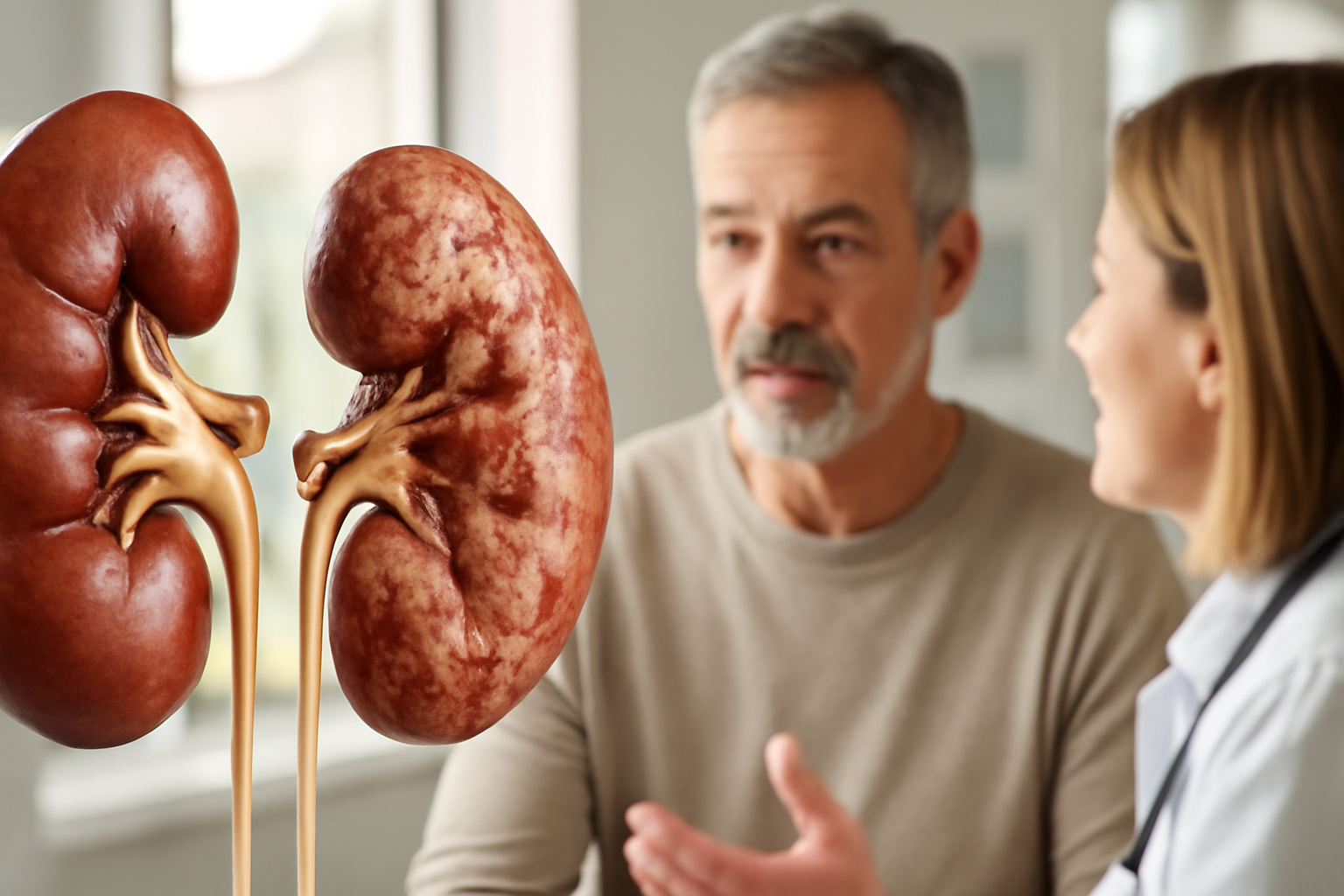
Your kidneys are two bean-shaped organs, each about the size of a fist, located just below your rib cage on either side of your spine. Every day, they filter roughly 200 quarts of blood, removing waste products and excess fluid that leave the body as urine. They also help regulate blood pressure, balance electrolytes, and trigger red blood cell production.
Chronic kidney disease is the gradual loss of kidney function over time. When your kidneys are damaged, they can no longer filter blood as efficiently, causing waste to build up in your body. Clinically, CKD is defined as kidney damage or a reduced glomerular filtration rate (GFR) — a measure of how well your kidneys filter blood — lasting for three months or more.
The NIH classifies CKD into five stages based on GFR:
- Stage 1: Normal or high GFR (≥90), with other signs of kidney damage
- Stage 2: Mildly reduced GFR (60–89)
- Stage 3: Moderately reduced GFR (30–59)
- Stage 4: Severely reduced GFR (15–29)
- Stage 5: Kidney failure (GFR <15), also called end-stage renal disease
Most people are diagnosed at Stage 3 or later. The earlier CKD is caught, the more options you have to preserve kidney function and avoid reaching Stage 5, which requires dialysis or a kidney transplant.
Signs and Symptoms of CKD
One of the most challenging aspects of chronic kidney disease is that early stages often produce no symptoms at all. Many people feel completely normal while their kidneys are already losing significant filtering capacity. By the time symptoms appear, the disease has usually progressed to a more advanced stage.
According to the Mayo Clinic, symptoms that may appear as CKD advances include:
- Fatigue and weakness that does not improve with rest
- Swelling (edema) in the ankles, feet, or hands due to fluid retention
- Shortness of breath, even with mild exertion
- Nausea or vomiting, especially in the morning
- Changes in urination — more frequent at night, foamy urine, or reduced output
- Persistent itching caused by waste buildup in the bloodstream
- Difficulty concentrating or brain fog
- Loss of appetite or a metallic taste in the mouth
- Muscle cramps, especially at night
- Pale or yellowish skin tone
A 2022 analysis published through NIH research found that anemia — a reduction in red blood cells — affects more than 50% of people with Stage 3b CKD or higher, contributing significantly to fatigue and reduced quality of life. If you notice unusual tiredness alongside any of the symptoms above, it is worth discussing kidney function with your doctor.
Causes and Risk Factors
Understanding what causes CKD is essential because many of the most important risk factors are modifiable — meaning you have real power to influence them.
Leading Causes:
- Diabetes: The single largest cause of CKD in the United States. According to the American Diabetes Association, about 1 in 3 adults with diabetes develops CKD. High blood sugar damages the blood vessels inside the kidneys over time.
- High blood pressure (hypertension): The second leading cause. Uncontrolled blood pressure damages the delicate filtering units in your kidneys. The American Heart Association notes that roughly 1 in 5 adults with hypertension also has CKD.
- Glomerulonephritis: Inflammation of the kidney’s filtering units (glomeruli), sometimes triggered by infections or autoimmune conditions like lupus.
- Polycystic kidney disease: A genetic condition where fluid-filled cysts grow in the kidneys.
- Repeated kidney infections: Recurrent urinary tract infections that reach the kidneys can cause scarring over time.
Non-Modifiable Risk Factors:
- Age over 60 — kidney function naturally declines with age
- Family history of kidney disease or kidney failure
- Race and ethnicity — African Americans, Hispanic Americans, and Native Americans are at higher risk, according to the CDC
- Low birth weight, which may reduce the number of kidney filtering units present at birth
Modifiable Risk Factors You Can Address:
- Poorly controlled blood sugar
- Unmanaged high blood pressure
- Obesity (BMI over 30)
- Smoking, which reduces blood flow to the kidneys
- Regular use of NSAIDs like ibuprofen or naproxen, which can stress the kidneys
- A diet chronically high in sodium and processed foods
If you have diabetes or hypertension, managing those conditions aggressively is the single most impactful step you can take for your kidney health. You may find it helpful to review our guide on Heart Disease: Signs, Causes, and How to Manage It, since cardiovascular and kidney health are closely linked.
Evidence-Based Management Options
CKD cannot be reversed in most cases, but its progression can often be significantly slowed. Research consistently shows that a combination of medical treatment and lifestyle changes gives people the best outcome. Here is what the evidence currently supports:
1. Blood Pressure and Blood Sugar Control
Keeping blood pressure below 130/80 mmHg is recommended by the American Heart Association for people with CKD. ACE inhibitors and ARBs — two classes of blood pressure medication — have been shown to protect kidney function beyond simply lowering blood pressure by reducing protein leakage into the urine (a key marker of kidney damage).
For people with diabetes and CKD, a class of medications called SGLT2 inhibitors has shown strong evidence of slowing CKD progression. Johns Hopkins Medicine notes that these drugs reduce kidney workload and have demonstrated cardiovascular benefits as well.
2. Dietary Adjustments
A kidney-friendly (renal) diet reduces the work your kidneys must do. Key adjustments include:
- Reduce sodium: Aim for less than 2,000 mg per day to help control blood pressure and reduce fluid retention
- Moderate protein: High-protein diets force kidneys to work harder; many nephrologists recommend 0.6–0.8 grams of protein per kilogram of body weight for CKD patients
- Watch potassium and phosphorus: As kidneys fail, they struggle to excrete these minerals, potentially leading to dangerous imbalances — your doctor can advise based on your lab results
- Stay hydrated appropriately: Dehydration strains kidneys, but fluid restriction may be needed in later stages — follow your care team’s guidance
An anti-inflammatory eating pattern — rich in vegetables, whole grains, legumes, and healthy fats — also supports kidney health. Our article on the Anti-Inflammatory Diet: Simple Changes That Help Your Body offers practical, evidence-based guidance you can start with.
3. Regular Physical Activity
A review published through the NIH found that regular moderate exercise — such as 30 minutes of walking five days a week — was associated with slower GFR decline and improved cardiovascular outcomes in people with CKD. Physical activity also helps control blood pressure, blood sugar, and body weight, all of which affect kidney health.
4. Avoid Kidney-Stressing Substances
- Stop smoking — it narrows blood vessels and accelerates kidney decline
- Limit alcohol to no more than one drink per day for women and two for men
- Use NSAIDs (like ibuprofen) only when necessary and always with your doctor’s knowledge
- Be cautious with herbal supplements — some, including aristolochic acid and certain weight-loss herbs, are directly toxic to kidney tissue
5. Monitor and Manage Complications
CKD raises the risk of anemia, bone disease, and cardiovascular problems. Cleveland Clinic physicians note that treating anemia in CKD — sometimes with erythropoiesis-stimulating agents — can meaningfully improve energy levels and quality of life. Regular lab work helps catch these complications early.
Because CKD and chronic stress are interconnected through blood pressure and inflammation, strategies for managing stress can also support kidney health — see our resource on Chronic Stress and Sleep: How to Break the Cycle for evidence-based techniques.
When to See a Doctor
Because CKD is often silent in early stages, the most important time to see a doctor is before you notice symptoms — particularly if you have risk factors like diabetes, hypertension, or a family history of kidney disease.
Seek medical attention promptly if you experience:
- Sudden or significant reduction in urine output
- Severe swelling in the legs or face
- Chest pain or shortness of breath (which can indicate dangerous fluid buildup)
- Confusion, difficulty concentrating, or extreme fatigue
- Foamy or bloody urine
- Persistent high blood pressure that is not responding to medication
What to ask your doctor:
- Can you check my GFR (glomerular filtration rate) and creatinine levels?
- Should I have a urine albumin-to-creatinine ratio test to check for protein in my urine?
- Do I need to see a nephrologist (kidney specialist)?
- What blood pressure target is appropriate for me?
- Are any of my current medications hard on my kidneys?
The National Kidney Foundation recommends annual kidney function screening for all adults with diabetes, hypertension, or a family history of kidney disease. If your primary care physician has not yet ordered a kidney function panel for you and you have these risk factors, it is a conversation worth having at your next appointment.
Frequently Asked Questions
Can chronic kidney disease be reversed?
In most cases, CKD cannot be reversed, but its progression can often be slowed significantly with proper treatment, lifestyle changes, and medication. Some causes of kidney damage — like certain infections or medications — can be addressed to allow partial recovery if caught early enough.
Is CKD always fatal?
No. Many people with CKD, especially those diagnosed in earlier stages, live full lives without ever reaching kidney failure. With good management, it is possible to maintain adequate kidney function for decades. The goal of CKD care is to protect remaining function and prevent complications.
How much water should I drink if I have CKD?
For most people in early-stage CKD, staying well-hydrated is still important, but the right amount depends on your specific stage, lab results, and other conditions. In later stages, fluid restriction may be necessary. Always follow your nephrologist or primary care doctor’s guidance on fluid intake.
Can I exercise with chronic kidney disease?
Yes, and research suggests it can actually help slow disease progression. Moderate activity like walking, cycling, or swimming is generally recommended. High-intensity exercise should be discussed with your doctor, particularly if you have cardiovascular complications or are in an advanced stage of CKD.
What foods should I avoid with CKD?
Common foods to limit include high-sodium processed foods, large portions of animal protein, potassium-rich foods like bananas and oranges (in later stages), phosphorus-rich foods like dairy and cola beverages, and alcohol. Your specific dietary restrictions depend on your lab results, so working with a renal dietitian is highly recommended.
Key Takeaways
Chronic kidney disease is one of the most common and underdiagnosed conditions in the United States, quietly affecting millions of adults who feel completely fine. The good news is that early detection and the right combination of medical treatment and lifestyle changes can slow its progression dramatically and help you maintain a good quality of life.
Managing blood pressure and blood sugar, adjusting your diet, staying active, and avoiding kidney-stressing substances are all within your reach — and they make a real difference. Regular screening, especially if you have diabetes, hypertension, or a family history of kidney problems, can catch CKD early when intervention is most effective.
You are not powerless against CKD. With the right knowledge and the right care team, you can take meaningful steps to protect your kidneys and your overall health for years to come.
This article is for informational and educational purposes only and does not constitute medical advice, diagnosis, or treatment. Always consult a qualified healthcare professional before making any health-related decisions or changing your treatment plan.
Reviewed by the Healthy Care Today Editorial Team — a group of health writers committed to evidence-based wellness content for everyday Americans.
Autor

negociosnanet001@gmail.com
Posts relacionados

Hypertension: What You Can Do to Lower Your Blood Pressure
- 0
- 2.096 words
Managing high blood pressure doesn’t have to feel overwhelming — here’s what the evidence says and what you can start doing today....

Type 2 Diabetes Management: What You Can Do Today
- 0
- 2.208 words
A practical, evidence-based guide to understanding and managing type 2 diabetes — so you can live well, feel better, and take real...

Living with Multiple Sclerosis: Symptoms and Management
- 0
- 2.136 words
Managing multiple sclerosis can feel overwhelming — but with the right strategies, many people live full, active lives for decades after diagnosis....

Living with Gout: Symptoms, Causes, and How to Manage It
- 0
- 2.186 words
Gout is one of the most painful forms of arthritis — but with the right approach, most people can prevent flares and...
Leia tudo
Living with Lupus: Symptoms, Causes, and How to Manage It
- 0
- 2.050 words
Lupus is one of the most misunderstood chronic conditions in America — but with the right approach, you can live well with...

Psoriatic Arthritis: Symptoms, Causes & How to Manage It
- 0
- 2.180 words
If you’re living with psoriatic arthritis, understanding your condition is the first step toward reclaiming your quality of life. When David, 47,...