- 0
- 2.008 words
If stress is stealing your sleep — and poor sleep is feeding your stress — here’s what the science says you can do about it.
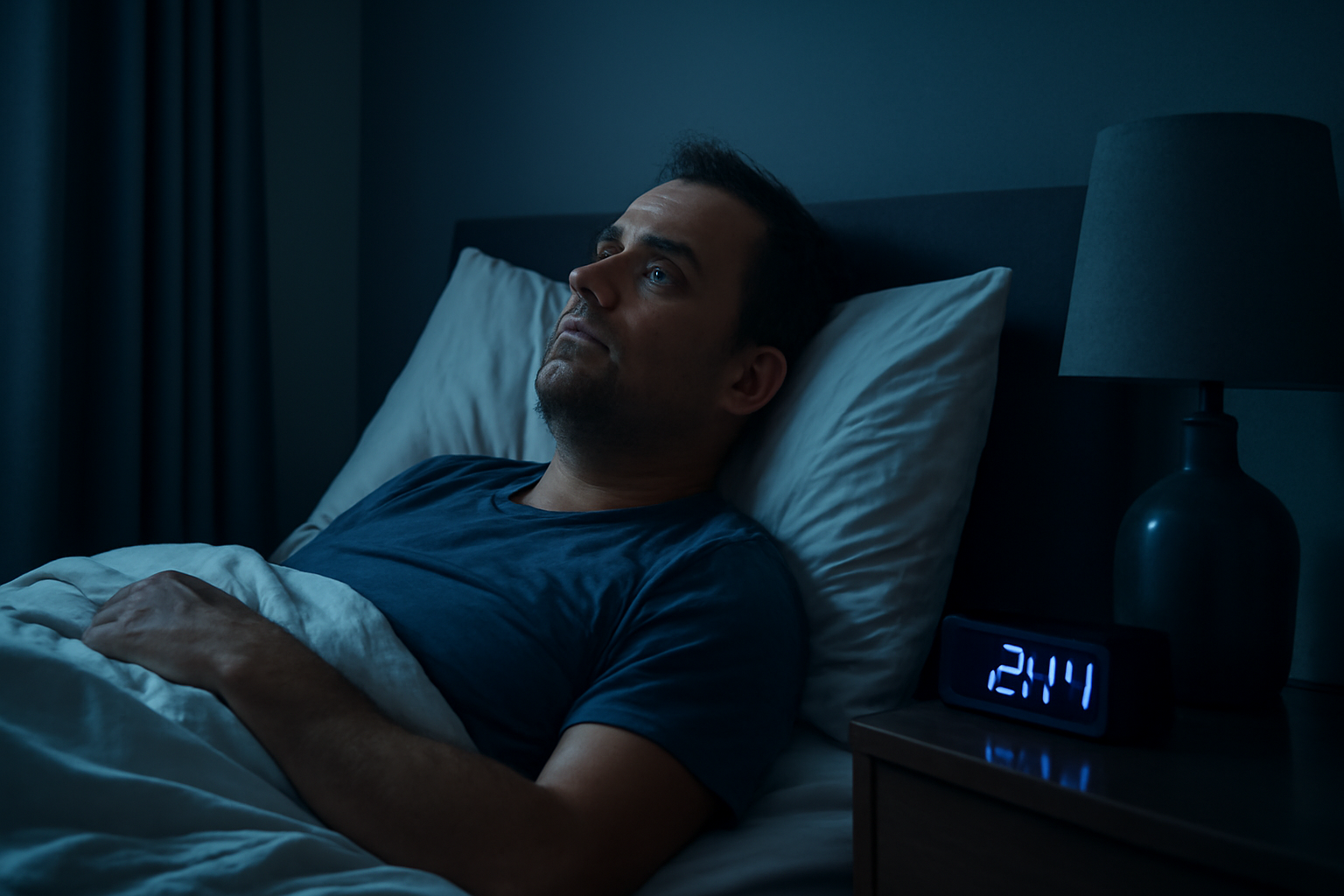
James, 47, had been waking up at 2 a.m. nearly every night for six months. His mind would race through work deadlines, financial worries, and family obligations the moment his eyes opened. By morning, he was exhausted — which made the stress feel even harder to manage. Sound familiar?
You’re not imagining it. Chronic stress and poor sleep are locked in a feedback loop that millions of Americans struggle to escape. According to the American Psychological Association, more than 65% of adults in the U.S. report that stress negatively affects their sleep quality. And the consequences go far beyond feeling tired.
In this article, you’ll learn exactly how stress disrupts sleep at a biological level, what that means for your long-term health, and — most importantly — what evidence-based strategies can help you break the cycle for good.
What Is the Stress-Sleep Cycle?
The stress-sleep cycle is a self-reinforcing pattern where chronic stress makes it harder to fall and stay asleep, and sleep deprivation makes it harder for your body to manage stress. It’s a two-way street — and once you’re on it, it can feel nearly impossible to exit.
When your brain perceives stress, it activates the hypothalamic-pituitary-adrenal (HPA) axis — your body’s central stress response system. In plain English, this triggers the release of cortisol, your primary stress hormone. Cortisol is designed to keep you alert and ready to respond to threats.
The problem? Your nervous system doesn’t distinguish between a deadline at work and a physical danger. Elevated cortisol in the evening suppresses melatonin — the hormone that signals your brain that it’s time to sleep. Research published through the National Institutes of Health confirms that high evening cortisol levels are directly associated with delayed sleep onset, more nighttime awakenings, and reduced slow-wave (deep) sleep.
This cycle affects an estimated 50 to 70 million American adults who experience chronic sleep issues, according to the CDC. For adults between 35 and 65, the stakes are especially high — this is the life stage when stress from career, caregiving, and health concerns tends to peak.
How Chronic Stress Physically Disrupts Sleep
Understanding the mechanisms behind this cycle can help you take more targeted action. Here’s what’s actually happening in your body:
- Elevated cortisol at night: Cortisol naturally peaks in the morning and declines through the day. Chronic stress disrupts this rhythm, keeping levels elevated well into the evening hours.
- Hyperarousal of the nervous system: Stress keeps your sympathetic nervous system (your "fight or flight" mode) activated, making it physically difficult for your body to enter the calm state needed for sleep.
- Racing thoughts and rumination: Anxiety-driven thinking — replaying conversations, worrying about tomorrow — activates the prefrontal cortex, the area of your brain responsible for problem-solving. This is the last thing you want active at bedtime.
- Reduced REM sleep: Studies indicate that high stress significantly reduces REM (rapid eye movement) sleep, the stage most associated with emotional processing and memory consolidation.
- Increased micro-awakenings: Stress-related hyperarousal leads to more fragmented sleep, even if you don’t fully wake up and remember it in the morning.
According to Harvard Health Publishing, adults who sleep fewer than six hours per night show significantly higher levels of inflammatory markers — which in turn amplifies the body’s stress response the following day. The cycle deepens.
The Health Consequences of an Unbroken Cycle
This isn’t just about feeling groggy. When chronic stress and poor sleep reinforce each other over months or years, the health consequences become serious and measurable.
The American Heart Association has identified poor sleep as an independent risk factor for cardiovascular disease, hypertension, and stroke. Adults who regularly get fewer than seven hours of sleep have a significantly higher risk of developing high blood pressure — and chronic stress is one of the most well-documented drivers of hypertension.
From a mental health standpoint, the relationship is equally concerning. Johns Hopkins Medicine research shows that people with insomnia are ten times more likely to develop clinical depression and seventeen times more likely to experience clinically significant anxiety than those who sleep well. Stress accelerates this risk substantially.
Other well-documented consequences include:
- Impaired immune function and slower recovery from illness
- Increased risk of type 2 diabetes due to cortisol’s effect on insulin sensitivity
- Weight gain, particularly around the abdomen
- Decreased cognitive performance, memory problems, and difficulty concentrating
- Reduced emotional resilience and increased irritability
If you’re already managing a chronic condition, this cycle can make it significantly harder to control. You may want to explore how sleep deprivation affects your mental health in greater depth to understand the full picture.
Evidence-Based Strategies to Break the Cycle
The good news: research strongly supports several approaches that interrupt this cycle from both ends — reducing stress’s impact on sleep and improving sleep’s ability to buffer against stress.
1. Anchor Your Sleep Schedule
Your body’s circadian rhythm — its internal 24-hour clock — is profoundly sensitive to consistency. The Mayo Clinic recommends going to bed and waking up at the same time every day, including weekends. This single change helps regulate cortisol and melatonin timing, making it easier to fall asleep even when stress is high.
2. Practice Progressive Muscle Relaxation (PMR)
PMR involves tensing and slowly releasing muscle groups throughout your body. Clinical studies suggest it activates the parasympathetic nervous system — your "rest and digest" mode — and can reduce pre-sleep arousal significantly. A 2022 review in a journal indexed by the NIH found PMR reduced sleep onset time by an average of 10 minutes in adults with stress-related insomnia.
3. Use the 4-7-8 Breathing Technique
Developed as a relaxation method and studied for its effect on the autonomic nervous system, this technique involves inhaling for 4 seconds, holding for 7, and exhaling for 8. Research suggests controlled breathing reduces cortisol levels and heart rate variability — two direct markers of stress arousal — within minutes.
4. Create a Worry Window
Rather than trying to stop your thoughts at bedtime (which rarely works), schedule a 15-minute "worry window" earlier in the evening — around 5 or 6 p.m. Write down your concerns and any action steps. Cleveland Clinic psychologists recommend this technique because it externalizes stress rather than suppressing it, reducing nighttime rumination significantly.
5. Limit Cortisol-Spiking Behaviors After 2 p.m.
Caffeine has a half-life of five to seven hours, meaning a 3 p.m. coffee still has half its stimulating effect at 8 p.m. Similarly, intense exercise late in the evening can spike cortisol. Many physicians recommend completing vigorous workouts by early afternoon and shifting to walking, yoga, or stretching in the evening hours instead.
6. Address the Root Stress Directly
Sleep hygiene alone won’t fix a cycle driven by unmanaged chronic stress. Therapies like Cognitive Behavioral Therapy for Stress (CBT) and mindfulness-based stress reduction (MBSR) have strong clinical evidence behind them. The American Psychological Association endorses MBSR as one of the most effective non-pharmacological approaches for chronic stress reduction. If you’re interested in drug-free approaches to sleep, our article on CBT-I for insomnia offers a proven framework worth exploring.
7. Optimize Your Sleep Environment
Your bedroom should be a cortisol-lowering zone. Research from the NIH suggests that room temperatures between 65 and 68°F promote deeper sleep by supporting the natural drop in core body temperature that accompanies sleep onset. Blackout curtains, white noise machines, and removing screens from the bedroom are all evidence-supported steps.
It’s also worth noting that habits built into a consistent routine tend to produce better outcomes than individual tactics applied randomly. For practical guidance on building routines that last, see how to build healthy habits that actually stick.
When to See a Doctor
Self-care strategies are a powerful first line of defense, but there are situations where professional evaluation is essential.
Seek medical attention if you experience:
- Inability to fall or stay asleep for more than three nights per week for three or more weeks
- Persistent fatigue that doesn’t improve with rest
- Nighttime panic attacks or heart palpitations that wake you
- Symptoms of depression (persistent low mood, loss of interest, hopelessness) alongside sleep issues
- Gasping, snoring heavily, or being told you stop breathing during sleep (possible signs of sleep apnea)
- Reliance on alcohol or sleep medications to fall asleep
What to tell your doctor: Be specific. Track how many nights per week you struggle, how long it takes to fall asleep, how often you wake up, and what your stress levels feel like. Many physicians recommend keeping a sleep diary for two weeks before your appointment.
Tests or screenings to ask about: A cortisol level test (saliva or urine), thyroid panel (since thyroid dysfunction can mimic stress-related sleep disruption), and a referral to a sleep specialist or mental health professional may all be appropriate. The Cleveland Clinic notes that a formal sleep study (polysomnography) may be warranted if sleep apnea is suspected.
An important nuance: not everyone responds to the same interventions in the same way. Individual variation in cortisol sensitivity, sleep architecture, and stress physiology means that a strategy that transforms one person’s sleep may have minimal effect on another’s. Working with a healthcare provider allows you to tailor your approach to your specific biology and circumstances.
Frequently Asked Questions
Can stress alone cause insomnia, even without any other underlying condition?
Yes, according to the American Academy of Sleep Medicine, acute stress is one of the leading triggers of short-term insomnia. When stress becomes chronic, it can evolve into a condition called chronic insomnia disorder, which persists even after the original stressor resolves. This is because the body has learned a pattern of hyperarousal at bedtime that continues independently.
How long does it take to break the stress-sleep cycle?
Research suggests that consistent application of behavioral strategies — particularly CBT-based approaches — typically shows measurable improvement within four to six weeks. However, individual results vary significantly based on the severity of stress, duration of sleep issues, and overall health status. Many people notice partial improvements within the first two weeks.
Is melatonin supplementation helpful for stress-related sleep problems?
Melatonin may help with sleep timing issues — particularly if your circadian rhythm has been disrupted — but it does not directly address cortisol-driven hyperarousal. Johns Hopkins Medicine notes that melatonin is most effective for jet lag and shift work rather than chronic stress-related insomnia. It’s best used as one part of a broader sleep strategy, not a standalone solution.
Does exercise help break the stress-sleep cycle?
Studies indicate that regular moderate-intensity exercise — such as brisk walking 30 minutes a day — significantly reduces cortisol levels over time and improves sleep quality. The American Heart Association recommends at least 150 minutes of moderate aerobic activity per week, and research suggests the sleep benefits typically appear within four weeks of consistent exercise.
Can diet affect the stress-sleep cycle?
Yes. High sugar intake and ultra-processed foods can destabilize blood sugar overnight, triggering cortisol release that disrupts sleep. Anti-inflammatory eating patterns — rich in whole foods, leafy greens, and omega-3 fatty acids — support both lower stress reactivity and better sleep quality, according to research published through Harvard Health Publishing.
The Bottom Line
Chronic stress and disrupted sleep are not two separate problems — they are one interconnected cycle. And breaking it requires addressing both sides simultaneously: calming the nervous system, rebuilding healthy sleep patterns, and, when necessary, seeking professional support.
The strategies outlined here are backed by strong clinical evidence and can produce real, lasting change. But they require consistency. Start with one or two changes — anchor your sleep schedule and add a 10-minute breathing practice — and build from there.
You have far more influence over this cycle than it might feel like right now. With the right tools and support, sleeping well through stress is genuinely achievable.
This article is for informational and educational purposes only and does not constitute medical advice, diagnosis, or treatment. Always consult a qualified healthcare professional before making any health-related decisions or changing your treatment plan.
Reviewed by the Healthy Care Today Editorial Team — a group of health writers committed to evidence-based wellness content for everyday Americans.
Autor

negociosnanet001@gmail.com
Posts relacionados
Anxiety and Sleep: Why Worry Keeps You Awake at Night
- 0
- 2.361 words
If racing thoughts and a pounding heart have ever kept you staring at the ceiling past midnight, you already know the exhausting...

Sleep and Grief: How Loss Disrupts Rest and How to Heal
- 0
- 2.579 words
Losing someone you love changes everything — including how you sleep. Here’s what grief does to your body at night, and what...
PTSD and Sleep: How Trauma Disrupts Rest and Recovery
- 0
- 2.231 words
Trauma doesn’t stay in the past — for millions of Americans, it follows them to bed every night, stealing the rest their...

Mindfulness for Sleep: How It Works and What to Try
- 0
- 2.171 words
A practical, evidence-based guide to using mindfulness to quiet your mind, reduce nighttime anxiety, and finally get the rest your body needs....
Sleep After 40: Why It Changes and How to Sleep Better
- 0
- 2.316 words
Sleep used to come easily — now it takes longer to fall asleep, you wake at 3 a.m. for no clear reason,...
Sleep and Emotional Regulation: How Rest Builds Resilience
- 0
- 2.045 words
Your ability to manage stress, stay calm under pressure, and bounce back from setbacks may have more to do with your sleep...