- 0
- 1.525 word
The Connection Between Sleep and Mental Health
If you’ve ever spent a night tossing and turning and then felt irritable, foggy, or overwhelmed the next day, you already know firsthand how closely sleep and mental health are connected. But this relationship goes much deeper than just feeling tired.
Research consistently shows that sleep is one of the most powerful — and most overlooked — tools for supporting emotional well-being. According to the National Institute of Mental Health (NIMH), sleep problems are closely linked to depression, anxiety, PTSD, and other mental health conditions. And the relationship runs both ways: poor mental health disrupts sleep, and poor sleep worsens mental health.
The good news? Improving your sleep quality is one of the most effective steps you can take to protect your psychological well-being — starting tonight.
What Happens to Your Brain While You Sleep
Sleep isn’t a passive state. While your body rests, your brain is actively doing critical maintenance work that keeps your emotions, memory, and stress responses functioning properly.
Emotional Processing Happens Overnight
During REM (rapid eye movement) sleep — the deep, dreaming stage — your brain processes emotional experiences from the day. Think of it as a nightly therapy session your brain runs on autopilot. Studies from UC Berkeley suggest that REM sleep helps “strip” the emotional charge from difficult memories, allowing you to wake up feeling more settled and less reactive.
When you consistently miss out on REM sleep, unprocessed emotional experiences can accumulate, making you more vulnerable to mood swings, anxiety, and even trauma responses.
Stress Hormones Reset While You Rest
Sleep plays a direct role in regulating cortisol, your body’s primary stress hormone. When you don’t sleep enough, cortisol levels remain elevated — which keeps your nervous system in a heightened state of alert. Over time, chronically high cortisol is associated with increased risk of depression and anxiety disorders, according to research published by the NIH.
A full night of quality sleep allows cortisol to naturally cycle back to healthy baseline levels, helping you start each day with a calmer, more balanced nervous system.
Your Brain Clears Toxins During Deep Sleep
During slow-wave (deep) sleep, the brain’s glymphatic system activates — flushing out metabolic waste products, including proteins associated with cognitive decline. This biological “cleaning cycle” helps protect long-term brain health and supports clearer thinking and better emotional regulation when you’re awake.
How Poor Sleep Affects Your Mental Health
Most adults need between 7 and 9 hours of sleep per night, according to the CDC. Yet roughly one in three American adults regularly falls short of that target. The mental health consequences of chronic sleep deprivation are significant and wide-ranging.
Increased Risk of Depression
Studies indicate that people with insomnia are significantly more likely to develop depression than those who sleep well. According to Harvard Health Publishing, the link between insomnia and depression is so strong that treating sleep problems is now considered a key component of depression management — not just a side issue.
If you’ve been feeling persistently low, hopeless, or unmotivated, it’s worth asking your doctor whether your sleep quality could be a contributing factor.
Heightened Anxiety and Worry
Sleep deprivation amplifies the brain’s threat detection system — specifically, the amygdala, which governs your fear and stress responses. Research from UC Berkeley found that sleep loss triggered a 60% increase in amygdala reactivity, essentially making the brain more prone to anxiety and emotional overreaction.
If you’ve noticed that everyday stressors feel bigger or more overwhelming when you’re tired, that’s your brain chemistry at work — not a personal weakness. You can learn more about this in our article on Anxiety and Sleep: Why You Can’t Rest and How to Fix It.
Impaired Emotional Regulation
When you’re sleep-deprived, the prefrontal cortex — the rational, decision-making part of your brain — becomes less effective at keeping the emotional brain in check. This shows up as shorter tempers, poor impulse control, increased irritability, and difficulty seeing situations clearly.
Over time, this pattern can strain relationships, reduce work performance, and create a negative feedback loop where emotional distress makes sleep even harder to achieve.
Worsened PTSD and Trauma Symptoms
For individuals living with post-traumatic stress disorder, sleep disruption is both a symptom and a driver of the condition. Nightmares, hyperarousal, and fragmented sleep prevent the brain from processing traumatic memories — keeping emotional wounds fresh rather than allowing natural healing over time.
Practical Ways to Improve Sleep for Better Mental Health
The connection between sleep and mental health gives you real leverage. Improving your sleep hygiene — the habits and behaviors that affect sleep quality — can produce measurable improvements in your mood, anxiety levels, and overall emotional resilience.
Stick to a Consistent Sleep Schedule
Your body’s internal clock, known as the circadian rhythm, thrives on consistency. Going to bed and waking up at the same time every day — even on weekends — reinforces your natural sleep-wake cycle and helps you fall asleep more easily and sleep more deeply.
Many sleep specialists recommend choosing a wake time first and working backward to establish your bedtime. Building consistent morning routines can also reinforce this rhythm — take a look at our guide on Healthy Morning Routines That Transform Your Day for practical ideas.
Limit Screen Exposure Before Bed
Blue light emitted by phones, tablets, and televisions suppresses melatonin — the hormone that signals to your brain that it’s time to sleep. Many sleep researchers recommend stopping screen use at least 60 minutes before your target bedtime.
Instead, use the wind-down hour for reading physical books, light stretching, journaling, or listening to calming audio. This transition time is especially important if anxiety tends to spike in the evening.
Create a Sleep-Friendly Environment
Your bedroom environment has a measurable impact on sleep quality. Consider the following evidence-backed adjustments:
- Temperature: Most people sleep best in a room between 65–68°F (18–20°C)
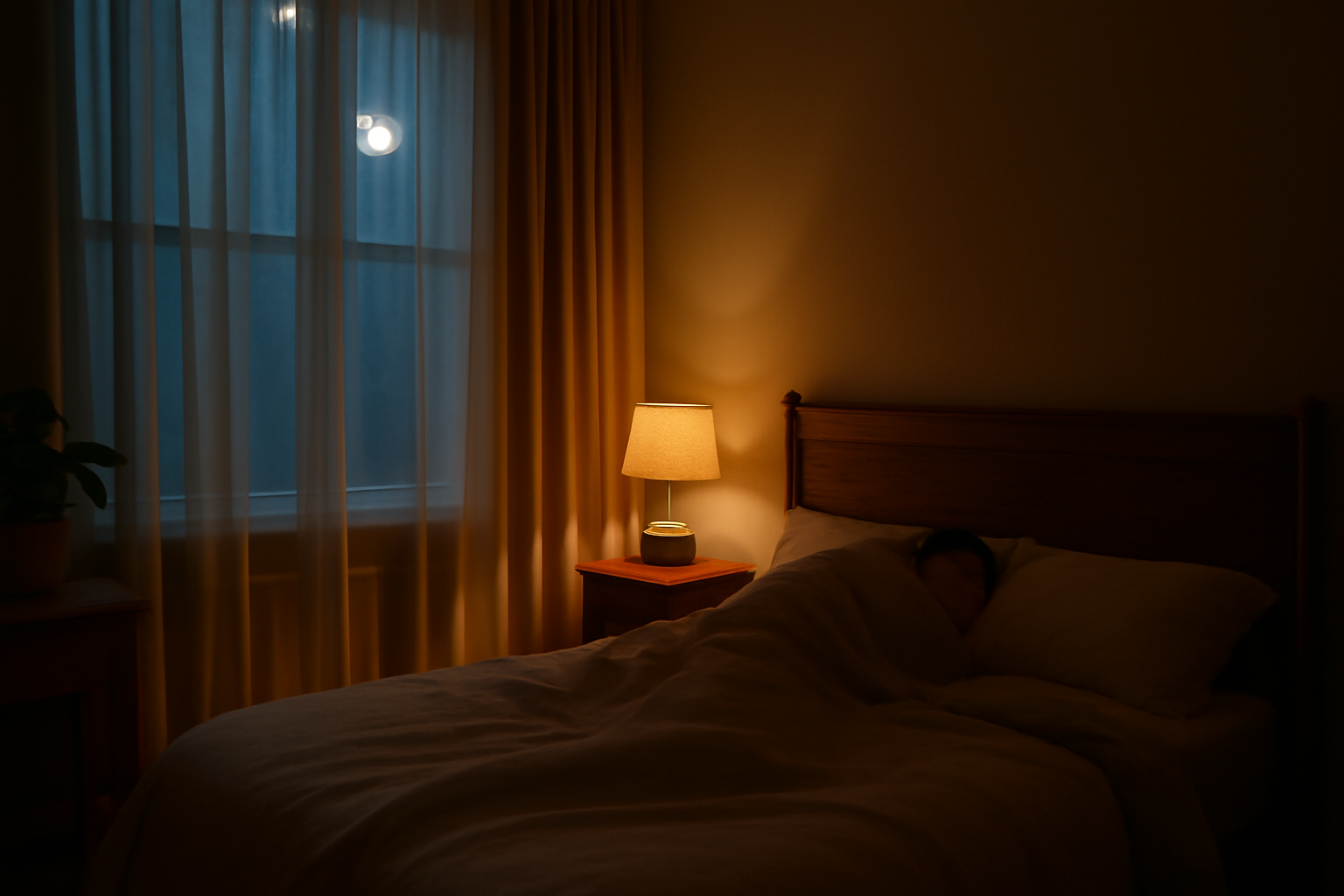
- Darkness: Use blackout curtains or a sleep mask to block light
- Sound: White noise machines or earplugs can reduce disruptive noise
- Reserving the bed for sleep: Avoid working, eating, or watching TV in bed — your brain needs to associate the bedroom with rest
Manage Stress Before It Manages You
Unresolved stress and racing thoughts are among the most common causes of difficulty falling asleep. Building a daily stress management practice — not just at bedtime — is essential for sleep health.
Research suggests that practices like mindfulness meditation, progressive muscle relaxation, deep breathing exercises, and regular physical activity can significantly reduce nighttime arousal and improve sleep onset. Even 10 minutes of guided breathing before bed can help activate your parasympathetic nervous system, shifting your body from “alert” to “rest” mode.
Watch Caffeine and Alcohol Intake
Caffeine has a half-life of about 5–7 hours, meaning a 3 PM coffee can still be affecting your system at 10 PM. Many sleep experts recommend cutting off caffeine consumption by early afternoon.
Alcohol is often mistakenly viewed as a sleep aid because it causes initial drowsiness — but it actually fragments sleep architecture, suppresses REM sleep, and can cause middle-of-the-night waking. Limiting alcohol, especially within 3 hours of bedtime, consistently improves sleep quality.
Consider Cognitive Behavioral Therapy for Insomnia (CBT-I)
If you’ve struggled with chronic insomnia, CBT-I is currently considered the gold-standard first-line treatment by sleep medicine specialists — more effective in the long run than sleep medications for most people. It works by identifying and changing the thoughts and behaviors that perpetuate sleeplessness.
For a deeper look at how this approach works, visit our article on CBT-I for Insomnia: The Drug-Free Sleep Solution.
When to Talk to a Doctor
While lifestyle changes help most people significantly, some sleep and mental health issues require professional support. Consider reaching out to your healthcare provider if:
- You’ve struggled with sleep problems for more than 3 months
- You regularly feel depressed, hopeless, or unable to experience pleasure
- You wake up gasping for air or your partner reports that you stop breathing during sleep (possible sleep apnea)
- Anxiety or intrusive thoughts are significantly disrupting your daily life
- You’re relying on sleep medications or alcohol to fall asleep regularly
A doctor or licensed therapist can evaluate whether an underlying condition like sleep apnea, depression, anxiety disorder, or hormonal imbalance may be contributing to your sleep problems — and guide you toward the right treatment plan.
The Bottom Line: Prioritizing Sleep Is Mental Self-Care
In a culture that often glorifies busyness and treats sleep as optional, it’s worth remembering what the science clearly shows: sleep is not a luxury. It is a biological necessity — and one of the most powerful investments you can make in your mental health.
By understanding the deep connection between sleep quality and emotional well-being, you’re better equipped to make sleep a genuine priority — not just something that happens when everything else is done. Small, consistent changes to your sleep habits can produce real, lasting improvements in your mood, resilience, and quality of life.
This article is for informational purposes only and does not constitute medical advice. Always consult a qualified healthcare professional before making health decisions.
Reviewed by a licensed health and wellness professional. Content is based on peer-reviewed research and guidance from recognized health authorities including the NIH, CDC, and Mayo Clinic.
Autor

negociosnanet001@gmail.com
Posts relacionados

Anxiety and Sleep: Why Worry Keeps You Awake at Night
- 0
- 2.361 words
If racing thoughts and a pounding heart have ever kept you staring at the ceiling past midnight, you already know the exhausting...

Sleep and Grief: How Loss Disrupts Rest and How to Heal
- 0
- 2.579 words
Losing someone you love changes everything — including how you sleep. Here’s what grief does to your body at night, and what...

PTSD and Sleep: How Trauma Disrupts Rest and Recovery
- 0
- 2.231 words
Trauma doesn’t stay in the past — for millions of Americans, it follows them to bed every night, stealing the rest their...

Mindfulness for Sleep: How It Works and What to Try
- 0
- 2.171 words
A practical, evidence-based guide to using mindfulness to quiet your mind, reduce nighttime anxiety, and finally get the rest your body needs....

Sleep After 40: Why It Changes and How to Sleep Better
- 0
- 2.316 words
Sleep used to come easily — now it takes longer to fall asleep, you wake at 3 a.m. for no clear reason,...
Sleep and Emotional Regulation: How Rest Builds Resilience
- 0
- 2.045 words
Your ability to manage stress, stay calm under pressure, and bounce back from setbacks may have more to do with your sleep...