- 0
- 2.093 words
Your emotional resilience, patience, and mental clarity may depend on something you do every single night — or don’t do well enough.
When Sleep and Mood Collide
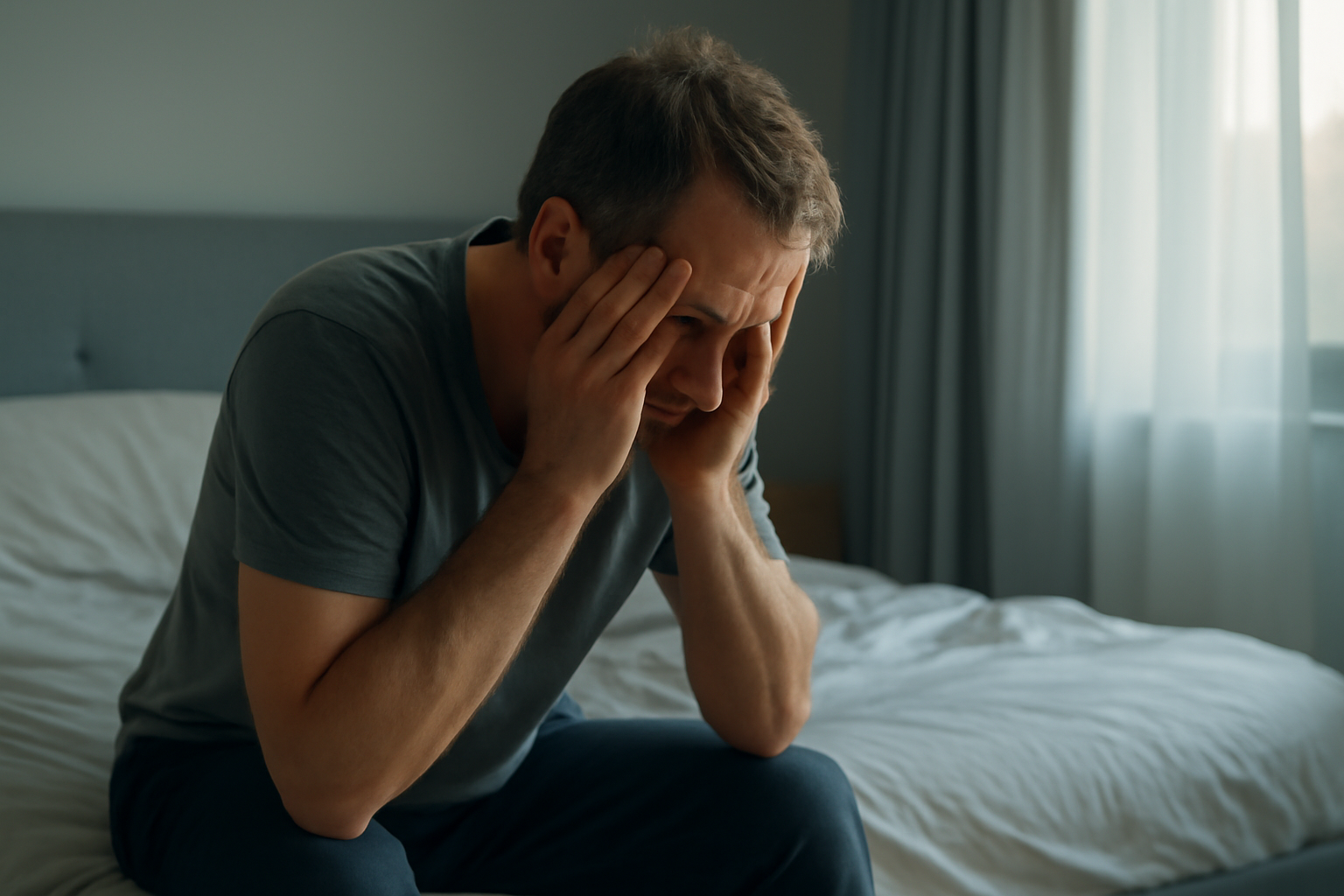
James, 47, had been snapping at his coworkers and feeling a low-grade irritability he couldn’t shake. He assumed it was work pressure. His doctor asked a simple question: “How many hours of sleep are you getting?” The answer — five to six hours a night — explained almost everything.
Poor sleep and emotional instability are deeply connected, and millions of American adults are experiencing this link without realizing it. According to the Centers for Disease Control and Prevention (CDC), more than one in three U.S. adults regularly fail to get the recommended seven or more hours of sleep per night.
What most people don’t fully appreciate is how dramatically this affects their emotional world — not just their energy levels. In this article, you’ll learn exactly how sleep shapes your mood, the science behind that connection, and practical steps you can take to protect both your sleep and your emotional health.
What Is the Sleep-Mood Connection?
The relationship between sleep and mood isn’t just about feeling grumpy after a bad night. It’s a complex, bidirectional relationship rooted in brain chemistry, hormones, and neural circuitry.
When you sleep, your brain isn’t simply “off.” It’s actively consolidating memories, clearing metabolic waste, regulating neurotransmitters like serotonin and dopamine, and resetting the emotional processing centers — especially the amygdala, which is responsible for how you respond to stress and perceived threats.
Research from the National Institutes of Health (NIH) shows that sleep-deprived individuals show up to a 60% increase in amygdala reactivity compared to those who are well-rested. In plain terms: poor sleep makes your emotional brain significantly more reactive and less regulated.
This explains why after a rough night, small frustrations feel enormous, patience runs thin, and maintaining a balanced perspective becomes genuinely difficult — not because you’re weak, but because your brain’s regulatory systems are operating under stress.
Signs That Poor Sleep Is Hurting Your Mood
The symptoms of sleep-related mood disruption are often mistaken for personality traits or situational stress. Recognizing them is the first step toward addressing the real cause.
Common emotional and psychological signs include:
- Increased irritability — minor inconveniences trigger disproportionate frustration
- Emotional volatility — mood swings that feel hard to control or explain
- Heightened anxiety — a sense of low-level worry or dread that’s hard to trace
- Reduced empathy — difficulty connecting emotionally with others
- Negative thinking — a tendency to expect the worst or catastrophize
- Low motivation — feeling flat, disengaged, or lacking enthusiasm
- Difficulty concentrating — brain fog that affects decision-making and focus
- Increased sensitivity to pain — emotional and physical pain thresholds often lower together
A study published and referenced by Harvard Health Publishing found that individuals with chronic sleep problems were significantly more likely to report symptoms of depression and anxiety than those with healthy sleep patterns — even when controlling for other lifestyle factors.
If you recognize several of these signs and you’ve been shortchanging your sleep, the connection is likely not coincidental. You may also want to explore how chronic stress and sleep deprivation reinforce each other in a damaging cycle.
Why Your Brain Needs Sleep to Regulate Emotions
Understanding the biological “why” behind sleep and mood can be motivating — and it’s genuinely fascinating.
The prefrontal cortex connection: Your prefrontal cortex — the part of your brain responsible for rational thinking, impulse control, and emotional regulation — requires deep, restorative sleep to function properly. When you’re sleep-deprived, this region becomes less active, essentially weakening your brain’s ability to put the brakes on emotional reactions.
REM sleep and emotional memory: Rapid Eye Movement (REM) sleep plays a particular role in processing emotional experiences. According to research supported by the NIH, REM sleep helps the brain neutralize the emotional charge of difficult memories — essentially helping you “process” distressing events overnight. Chronic REM disruption means old emotional wounds can feel perpetually raw.
Cortisol and serotonin imbalance: Poor sleep elevates cortisol (the stress hormone) and disrupts the production of serotonin — a key mood-stabilizing neurotransmitter. The result is a biochemical environment that primes your body for anxiety and low mood.
The inflammation factor: Sleep loss triggers inflammatory pathways in the body. According to the Cleveland Clinic, chronic inflammation has been linked to depression, anxiety, and other mental health challenges. This means that poor sleep doesn’t just affect how you feel — it creates biological conditions that make emotional resilience harder to sustain.
If you’re also managing concerns like depression and its complex relationship with sleep, understanding these mechanisms is especially important.
Causes and Risk Factors for Sleep-Related Mood Problems
Not everyone who sleeps poorly develops significant mood problems — but certain factors raise the risk considerably.
Modifiable risk factors (things you can change):
- Irregular sleep schedule — going to bed and waking at inconsistent times disrupts your circadian rhythm
- Screen exposure before bed — blue light suppresses melatonin production and delays sleep onset
- Alcohol use — while alcohol may help you fall asleep, it significantly disrupts REM sleep quality
- Caffeine consumed too late in the day — caffeine has a half-life of about five to six hours in most adults
- High stress levels — unmanaged stress activates the nervous system and prevents deep sleep
- Sedentary lifestyle — physical inactivity is associated with poorer sleep quality, according to Johns Hopkins Medicine
Non-modifiable or harder-to-change risk factors:
- Age — sleep architecture naturally changes after 40, with less time spent in deep, restorative sleep stages
- Sex — women are statistically more likely to experience insomnia, particularly during perimenopause and menopause
- Genetics — family history of sleep disorders or mood disorders increases individual risk
- Chronic health conditions — pain conditions, sleep apnea, GERD, and others commonly interrupt sleep
- Shift work — working non-traditional hours fundamentally disrupts the body’s natural sleep-wake cycle
The CDC reports that adults aged 45-64 are among those most likely to report insufficient sleep, placing many readers in this article’s core audience squarely in a higher-risk group. If your sleep struggles are tied to aging and lifestyle changes, healthy aging strategies after 40 can offer practical support.
Evidence-Based Ways to Improve Sleep and Protect Your Mood
The good news is that many of the most effective interventions are accessible, affordable, and don’t require a prescription. Here are approaches backed by research and recognized by leading health institutions.
1. Prioritize sleep consistency above all else
Going to bed and waking at the same time every day — including weekends — is one of the most powerful tools for improving sleep quality. Your circadian rhythm responds to consistency, and even small adjustments of 15 minutes at a time can help reset your internal clock over two to three weeks.
2. Practice stimulus control
The Mayo Clinic recommends using your bed only for sleep and sex — not reading, scrolling, or watching TV. This conditions your brain to associate the bedroom with sleep, making it easier to wind down when you lie down.
3. Implement a wind-down routine
A 30-to-60-minute pre-sleep routine signals to your nervous system that it’s time to shift gears. This might include dimming lights, light stretching, reading (physical books), journaling, or calming breathwork. A consistent evening routine has been shown to reduce sleep onset time and improve sleep quality.
4. Try Cognitive Behavioral Therapy for Insomnia (CBT-I)
CBT-I is considered the gold-standard first-line treatment for chronic insomnia by the American Academy of Sleep Medicine. It addresses the thoughts and behaviors that interfere with sleep — without medication. Studies indicate it produces better long-term outcomes than sleep medications for most people.
5. Manage daytime stress proactively
Because stress and sleep are bidirectionally linked, reducing daytime anxiety directly improves nighttime sleep. Evidence-based approaches include mindfulness meditation, regular aerobic exercise, and structured problem-solving journaling. Research from Harvard Health Publishing suggests that even 20 minutes of moderate exercise can improve sleep quality that same night.
6. Limit alcohol and caffeine strategically
Cut off caffeine by 2 p.m. and limit alcohol to one drink or fewer, ideally earlier in the evening. These two changes alone have measurable effects on sleep architecture and emotional regulation the following day.
7. Consider environmental sleep hygiene
Keep your bedroom cool (between 65-68°F is commonly recommended), dark, and quiet. According to the National Sleep Foundation, a cooler environment supports the natural drop in core body temperature that facilitates sleep onset.
A note of nuance: These strategies work well for most people with mild to moderate sleep difficulties. However, individual results vary, and if sleep problems persist despite consistent effort, an underlying condition such as sleep apnea, a mood disorder, or a medical issue may be contributing. In those cases, professional evaluation is not optional — it’s necessary.
When to See a Doctor About Sleep and Mood
While lifestyle adjustments can make a meaningful difference, some situations require professional attention. Don’t wait too long to seek help if you notice the following.
Red flags that warrant medical evaluation:
- You’ve had persistent sleep problems for more than three months despite trying lifestyle changes
- You snore loudly, gasp during sleep, or wake up feeling unrefreshed regardless of how long you sleep (possible sleep apnea)
- Your mood symptoms are significantly affecting your relationships, job, or daily functioning
- You’re experiencing thoughts of hopelessness, worthlessness, or self-harm
- You’re relying on alcohol or over-the-counter sleep aids regularly to fall asleep
- You feel anxious or fearful about bedtime itself
What to tell your doctor:
Be specific. Track your sleep patterns for one to two weeks before your appointment — note bedtime, wake time, number of nighttime awakenings, and mood ratings the following day. This data helps your provider identify patterns and make a more accurate assessment.
Tests and screenings to ask about:
- A sleep study (polysomnography) if sleep apnea is suspected
- Thyroid function tests — hypothyroidism can cause both sleep problems and mood changes
- A validated mood screening tool such as the PHQ-9 (for depression) or GAD-7 (for anxiety)
- A referral to a sleep specialist or licensed therapist trained in CBT-I
Frequently Asked Questions
How quickly does poor sleep affect your mood?
The effect can be nearly immediate. Research suggests that even a single night of poor sleep can measurably increase emotional reactivity and reduce positive mood the following day. Chronic deprivation compounds these effects significantly over time.
Can improving sleep actually reduce anxiety and depression symptoms?
Studies indicate that yes — improving sleep quality is associated with meaningful reductions in anxiety and depressive symptoms for many people. However, when a diagnosable mood disorder is present, sleep improvement alone is usually not sufficient and should be combined with appropriate mental health treatment.
How many hours of sleep do adults over 40 actually need?
The CDC and the American Academy of Sleep Medicine both recommend seven to nine hours per night for adults. Older adults sometimes need slightly less, but consistently sleeping under six hours is associated with measurable health and mood consequences at any age.
Is it okay to use melatonin to improve mood-related sleep problems?
Melatonin may help with circadian rhythm issues (like jet lag or shift work) but is not strongly supported as a treatment for chronic insomnia or mood-related sleep disruption. Many physicians recommend exploring CBT-I and behavioral strategies before turning to supplements. Always discuss with your doctor before starting any supplement.
Could my sleep problems be a sign of a more serious mental health condition?
Possibly. Chronic insomnia is a known risk factor for — and symptom of — depression, anxiety disorders, and bipolar disorder. If your sleep problems are accompanied by persistent low mood, excessive worry, or mood episodes, a mental health evaluation is strongly recommended.
The Bottom Line
Sleep is not a passive luxury — it’s an active biological process your brain depends on to regulate your emotions, manage stress, and sustain your mental health. When you consistently shortchange your sleep, you’re not just tired. You’re operating with a compromised emotional system.
The relationship between sleep and mood is real, well-documented, and — most importantly — responsive to change. Whether that means adjusting your evening habits, trying a structured approach like CBT-I, or finally having a candid conversation with your doctor, taking your sleep seriously is one of the most powerful investments you can make in your emotional wellbeing.
You deserve to wake up feeling like yourself. That starts with giving your brain the sleep it was designed to have.
This article is for informational and educational purposes only and does not constitute medical advice, diagnosis, or treatment. Always consult a qualified healthcare professional before making any health-related decisions or changing your treatment plan.
Reviewed by the Healthy Care Today Editorial Team — a group of health writers committed to evidence-based wellness content for everyday Americans.
Autor

negociosnanet001@gmail.com
Posts relacionados
Anxiety and Sleep: Why Worry Keeps You Awake at Night
- 0
- 2.361 words
If racing thoughts and a pounding heart have ever kept you staring at the ceiling past midnight, you already know the exhausting...

Sleep and Grief: How Loss Disrupts Rest and How to Heal
- 0
- 2.579 words
Losing someone you love changes everything — including how you sleep. Here’s what grief does to your body at night, and what...
PTSD and Sleep: How Trauma Disrupts Rest and Recovery
- 0
- 2.231 words
Trauma doesn’t stay in the past — for millions of Americans, it follows them to bed every night, stealing the rest their...

Mindfulness for Sleep: How It Works and What to Try
- 0
- 2.171 words
A practical, evidence-based guide to using mindfulness to quiet your mind, reduce nighttime anxiety, and finally get the rest your body needs....
Sleep After 40: Why It Changes and How to Sleep Better
- 0
- 2.316 words
Sleep used to come easily — now it takes longer to fall asleep, you wake at 3 a.m. for no clear reason,...
Sleep and Emotional Regulation: How Rest Builds Resilience
- 0
- 2.045 words
Your ability to manage stress, stay calm under pressure, and bounce back from setbacks may have more to do with your sleep...